
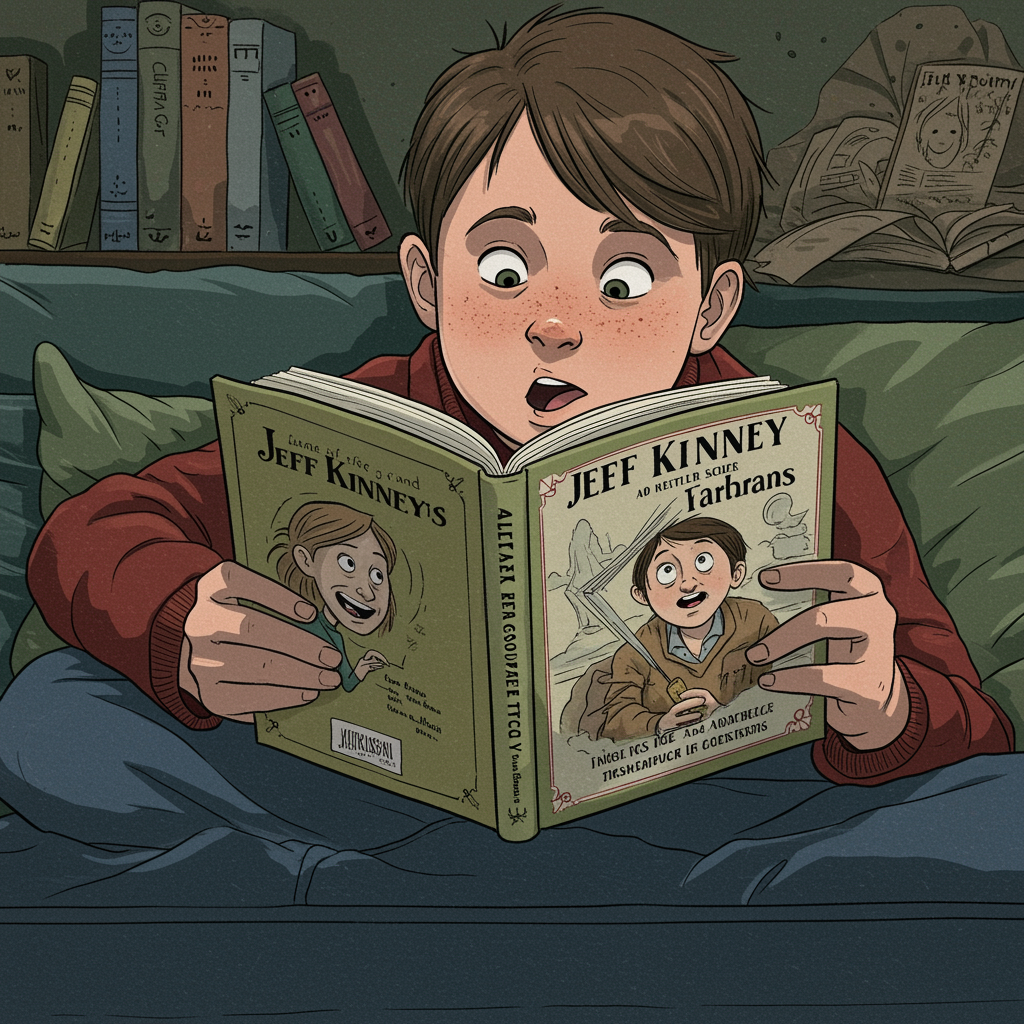

Finding the best Jeff Kinney books means diving into the chaotic, hilarious, and often painful world of middle school. Kinney created a genre of his own with Diary of a Wimpy Kid. He proved that pictures and text work better together than apart.
Millions of students read these books because they feel real. Greg Heffley is not a brave hero or a chosen one. He is selfish, lazy, and trying to survive the awkwardness of growing up.
We created this guide to break down the series. We explore why these books work, which ones you should read first, and what they teach us about modern childhood.
The Wimpy Kid Phenomenon
Jeff Kinney did not originally write these books for kids. He spent years working on a book for adults about looking back on childhood. When he pivoted to a younger audience, he kept the dry, sarcastic wit intact.
This decision made the series legendary. Readers appreciate that the narrator does not talk down to them. Greg speaks directly to the reader with total honesty about his frustrations.
The format changed the publishing industry. The mix of handwriting font and simple line drawings makes the pages turn fast. It invites “reluctant readers” to finish a whole novel in one sitting.
Analyzing the Anti-Hero: Greg Heffley
Most Young Adult books feature a protagonist you want to emulate. Greg Heffley acts differently. He often makes the wrong choice. He lies to his parents, manipulates his best friend, and tries to cheat his way to popularity.
This creates a unique reading experience. You do not always root for Greg to win. Sometimes, you read to see him face the consequences of his own bad planning.
For students analyzing literature, Greg creates a perfect case study of an “unreliable narrator.” The text says one thing, but the drawings often reveal the humiliating truth.
Top Picks from the Series
With so many books in the catalog, it helps to know where to start. These entries capture the peak of Kinney’s storytelling.
Diary of a Wimpy Kid (Book 1)
This started it all. You meet the Cheese Touch, Rowley, and the terror of Halloween. The structure is episodic, feeling like a real diary.
It introduces the core conflict: Greg thinks he is superior to everyone else, but the world constantly proves him wrong. It remains the purest example of the concept.
Rodrick Rules (Book 2)
Many fans consider this the best book in the series. It focuses on the relationship between Greg and his older brother, Rodrick.
The stakes feel higher here. Rodrick knows Greg’s most embarrassing secret. The dynamic captures the brutal reality of sibling rivalry perfectly.
Dog Days (Book 4)
This book captures the specific feeling of a summer vacation that goes wrong. Greg wants to stay inside and play video games. His dad wants him to go outside and be active.
The conflict is relatable to almost every teenager. It also features some of the funniest set pieces, including the incident at the public pool.
The Ugly Truth (Book 5)
Kinney shifts the tone slightly here. Greg and Rowley have a serious fight, and they stop being friends for a while.
It deals with puberty and the shifting social landscape of middle school. It shows that Kinney can handle emotional weight alongside the slapstick humor.
The World of Rowley Jefferson
Jeff Kinney expanded the universe by letting Greg’s best friend write his own diary.
Diary of an Awesome Friendly Kid
Rowley creates a total contrast to Greg. He is innocent, kind, and totally unaware of social hierarchy. Reading this immediately after a Wimpy Kid book offers a brilliant perspective shift.
You realize how much Greg distorts reality. Rowley sees the good in everyone, which makes Greg’s cynical worldview look even starker.
Why Teachers Use These Books
Educators used to ban comic hybrids. Now, they embrace them. These books build “visual literacy.” Readers must interpret the drawings to get the full joke.
They also teach irony. Students learn to read between the lines. When Greg claims he is a victim, the reader understands he is actually the problem.
The vocabulary is deceptive. Kinney uses precise, sometimes complex language, but the context clues make it accessible. It builds reading confidence.
Beyond the Humor: Real Themes
Underneath the jokes, Kinney tackles real issues.
- Peer Pressure: Greg constantly changes his personality to fit in.
- Family Dynamics: The Heffley parents try their best, but they often misunderstand their kids.
- Bullying: The series shows bullying from both sides—the victims and the perpetrators.
Frequently Asked Questions
Do I need to read them in order?
Not strictly. Each book creates a self-contained story. However, reading them in order lets you see the callback jokes and minor character arcs.
What is the target age group?
The sweet spot is ages 8 to 12. However, high schoolers and adults appreciate the nostalgia and the cynical humor.
How many books are in the series?
Jeff Kinney releases a new book almost every year. The main series has over 18 entries, plus the Rowley spinoffs and movie journals.
Is Greg Heffley a bad person?
He is a flawed kid. He represents the selfish impulses we all have but usually hide. He is not “bad,” but he has a lot to learn.
Are the movies worth watching?
The original trilogy of films is beloved by fans. They capture the spirit of the books well. The newer animated films on Disney+ stick closer to the art style.
Why does Greg never age?
Kinney uses a “floating timeline,” similar to The Simpsons. Greg stays in middle school forever so the stories can continue without him growing up and leaving.
What should I read after Wimpy Kid?
If you like the humor, try Big Nate by Lincoln Peirce. If you like the journal format, try Dork Diaries by Rachel Renée Russell.
Jeff Kinney created a masterpiece of modern humor. He turned the ordinary struggles of a middle school student into a global phenomenon. Whether you are a student or just young at heart, these books guarantee a laugh.